
From time to time you may experience problems with your snails. Very little is known about what these illnesses are, what causes them, and even less is known about treatments. Unfortunately it seems more time is spent on increasingly more ingenious ways to kill them.
Because of this, the following information is a mix of whatever research is possible and available, theory and hypothesis, logical thinking and the result of various discussions with a large group of snail owners. It is with the help of the community at large, that these problems can at least be documented. Where possible I have tried to link to example incidents.
Hopefully, we can find some effective solutions to the majority of these problems but for now I'm afraid you'll have to be content with various suggestions and discussion.
Wounds
 Fig. 1 - Courtesy of Anjie Burdett
 Fig. 2 - Courtesy of Gail Priestley
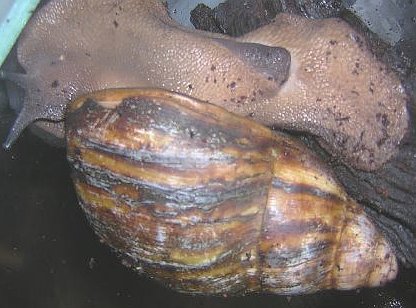 Fig. 3 - Courtesy of Anjie Burdett
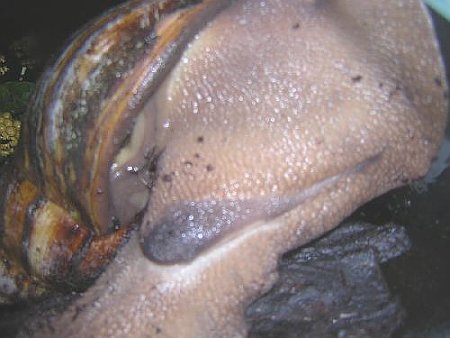 Fig. 4 - Courtesy of Anjie Burdett
Wounds are not that common in captive bred snails but wild caught snails can sport all manner of cuts and grazes, often covered in scars and scrapes as a result of living wild and from horrific transport conditions. These cuts can and will heal, given time and proper care.
The first thing to do is clean the wound properly. Bathing in an extremely diluted solution of Melafix or green tea, will provide some anti-septic benefits. Other than that there is very little you can do. If the wound is pretty messy, I'd suggest putting the snail in a tank without substrate to minimise it getting dirty and infected.
Scars often appear white and darken and fade as they heal as shown in Figures 1,2 and 3. In time some cuts will be invisible, but many will leave visible scars that don't seem to bother the snails.
Sometimes, cuts can cause bits of flesh to dry, harden and fall off as in one particular case where the tail split in two (click here for details).
If any flap of skin starts to smell, it is because the flesh is dead and is no longer receiving blood from the snail. Most snails have haemocyanin in their blood for transporting oxygen and therefore don't have red blood that iron-rich haemoglobin provides. As a result it is harder to see what flesh is dead and what isn't. Smell would probably be the first indicator that the flesh cannot be saved.
At this point it may be wise to cut it off. If you trim the dead flesh it won't cause pain to the snail. Obviously caution is required here but you could save any spread of gangrene. In the aforementioned split-tail case a smell occurred but the piece dropped off naturally and that was the end of that. It's certainly worth observing your snail closely before taking such a drastic decision. Any sort of gangrenous sore on the body which obviously can't be cut off should be cleaned extremely thoroughly. It may even be necessary to cauterise it, something which I have no experience or knowledge of whatsoever as far as snails are concerned. If I encountered such a problem and it was deteriorating and I'd tried normal solutions then I'd consider it. You could also try anti-septic cream because the snails' life is in jeopardy anyway.
The hardest task is keeping the snail out of its shell while you are dealing with the problem. I find turning a snail on its back so-to-speak, when it has come out, reduces the likelihood of it retracting whilst being handled. As always perseverence is needed.
Wounds inside the shell, probably caused by a shell break should be cleaned and left alone as they are the snails' internal organs.
Further Reading
To search the forum for threads definitely related click here.
To search the forum for threads possibly related click here.